Social Modes

New Truth Initiative Research Finds Smoking's Social Appeal Has Risen Among Young People
New Truth Initiative survey data suggest cigarette smoking's social appeal is rising among young people, with more teens and young adults describing smoking as "cool" and more associating it with fitting in over recent years. The findings raise concerns that changing attitudes combined with a re-emergence of tobacco imagery across entertainment, social media, fashion, and celebrity pop culture could undermine decades of progress in reducing deadly cigarette use.
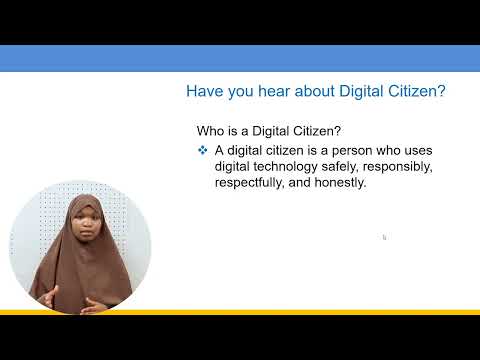
Internet Safety Citizenship: Respectful Online Communication
This lesson teaches learners how to communicate respectfully and responsibly online, covering digital etiquette, kindness in ...

Interspecies communication
Decoding how animals communicate could reveal the inner lives of other species—and give humans a window onto how they see the world.

Artery AT32 USB Multifunction Bridge Adapter Enables Flexible and Efficient Communication
During embedded development, different devices often utilize different communication interfaces, making flexible interface conversion and efficient data transmission essential. To address these challenges, Artery Technology introduces the "AT32-USBHS-Adaptor", a multifunction bridge adapter designed to simplify device connectivity and debugging while improving development efficiency.

ABSI Is Helping Teachers and Families Get Ready for Fall With Free Social Skills Resources
Educational service provider's free YouTube videos and downloadable social stories have reached more than one million ...

Structural Defects in Canine Ethology: A Structural Analysis of the Inconsistency Between Solitary Animal Models and Neurophysiological Premises
AbstractThis study demonstrates that the "solitary animal model" relied upon by modern Applied Behavior Analysis (ABA) and veterinary behavioral medicine is structurally inconsistent with the neurophysiology, evolutionary biology, and behavioral development of dogs, which are highly social anima

Full Alliance Group, Inc (OTC:FAGI) YAHBEE Highlights Community-Commerce Model for Agentic Commerce Era
OLDSMAR, FL / ACCESS Newswire / October 23, 2026 / YAHBEE, the umbrella brand for an integrated platform being developed by Qubee Hive Holdings, Inc., is highlighting its community-commerce model as merchants prepare for a commerce environment increasingly shaped by AI-assisted discovery, shopping recommendations and digital payment workflows.

Northern Illinois University Partners with InScribe Education to Advance Engagement and Belonging for a Growing Online Population
InScribe, a digital community platform built to help colleges and universities create community around online learning, today announced a partnership with Northern Illinois University (NIU) to launch a dedicated engagement platform for its growing population of online students.

Show HN: Shay.me – Personal AI assistant to get things done
Introducing Shay, a personal AI assistant that gets things done.Shay understands your goals, learns what matters to you and completes tasks across 1,500+ tools end to end. The vision: an assistant that anticipates what you need and acts before you ask.Equipped with its own computer, Shay handles complex, long-running workflows from start to finish. It researches and qualifies leads, creates and schedules social media posts, analyses ad performance, builds reports and spreadsheets, manages your i

How social media micro-trends are rewriting the way we form identities
Social media has always influenced the way people present themselves, but the pace of that influence has changed dramatically ...

Social contagion: why we must stop spreading school violence videos on social media — Lim Yi Wei
OCTOBER 22 — In the wake of high-profile school violence cases, the phrase “Syukurlah Malaysia masih aman (Thank goodness Malaysia is still peaceful)” feels a little shakier....

People who both 'exercise' and have 'hobbies/social interactions' maintained cognitive function for about 7 years longer—a study of 54,000 people across 4 countries
Is 'either one' enough?Even as we age, we want to keep our minds sharp. There are two main recommendations for this. One is exercise. The other is a lifestyle that involves using your brain and interacting with others, such as through hobbies and social activities.However, it is not easy to keep

Is it true that 'loneliness is equivalent to smoking 15 cigarettes a day'? What we know from research on loneliness and health
'Loneliness is as bad for your health as smoking 15 cigarettes a day.'You may have seen this statement somewhere before. While it is impactful and tempting to believe, some people may feel it is a bit of an exaggeration.In this article, we will trace where this statement came from and organize w

AI and Multichannel Communication Come to Italian Municipalities
ROME & MILAN & LONDON, October 21, 2026--ANCIcomunicare and Audiencerate are partnering to provide Italian municipalities and local authorities with a new platform dedicated to data management and multichannel communication.

10 Digital Tools Entrepreneurs Can Use to Protect Their Businesses and Work Online
10 Digital Tools Entrepreneurs Can Use to Protect Their Businesses and Work Online Running a business increasingly means managing sensitive information

Home State Health, McCormack Baron Salazar and Urban Strategies, Inc. Announce Preservation Square Community Partnership to Support Families with Services, Econ…
/PRNewswire/ -- Home State Health, McCormack Baron Salazar (MBS), and Urban Strategies, Inc. (USI) today announced a local collaboration focused on supporting...

‘Leedear 9 ‘ Gertrude Bulya and the growing role of digital influence in community support
Uganda’s digital landscape has created new opportunities for content creators to connect with audiences, support businesses ...

Show HN: Local embedding and ranking for tech feeds
I follow a bunch of blogs and feeds, and Skimfeed was too busy for me. Initially I built a Glance page, and when colleagues saw it they asked me to share it. That led to (the idea of) okaeri, a minimal startpage & feed recommendation algorithm that runs locally.In the background it runs EmbeddingGemma 2 (270M, 8-bit ONNX, on CPU) to embed new stories from the feeds you follow, and a custom ranking algorithm uses those embeddings (plus what you open, like and hide) to put the most relevant it

Show HN: Embodsi – Embodied Super Intelligence
embodsi is a generative AI MMO experience that runs in the browser. It allows people to communicate (text, audio, video, avatar emotes and movement) and collaboratively build 3D spaces and games via LLMs connected to harnesses and sandboxes for object modeling, space layout, game logic, and driving persistent avatars with shared context and memory.It’s different from existing 3D social apps (AFAIK) because it enables people to build multiplayer virtual worlds, games, and characters with generati

Siebel Newsom probes social media harm in 'Miss Representation' sequel
Jennifer Siebel Newsom discusses her documentary "Miss Representation: Rise Up," in theaters Thursday, warning of social ...